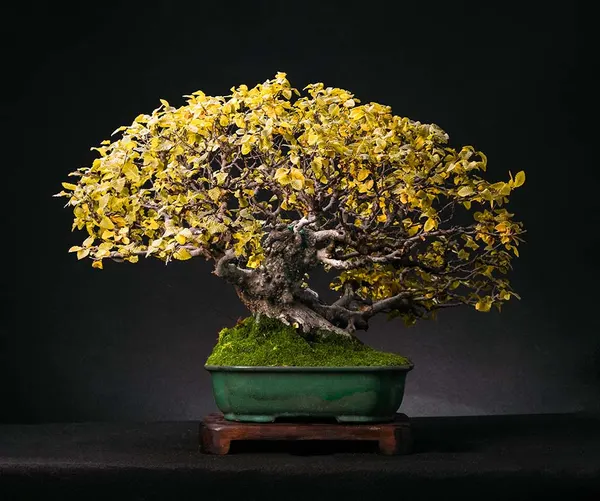
White Mulberry
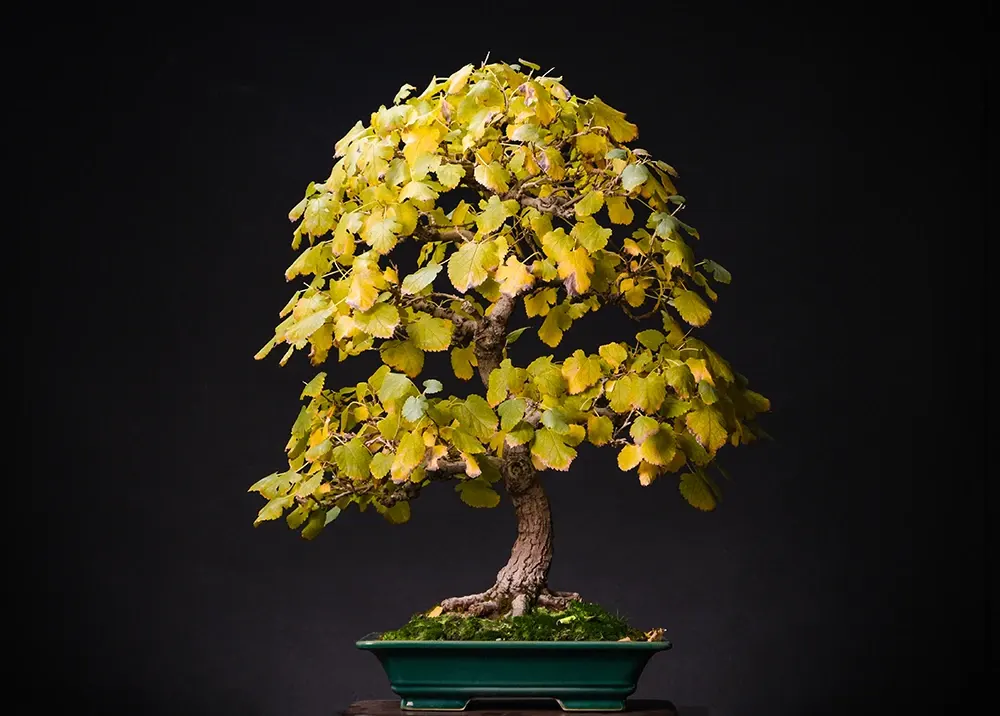
ეს ბონსაი ჩემი პირველი ნამუშევარია, მასზე მუშაობა 1990 წელს დაიწყო. ის თუთის ნაყოფიდან არის გაზრდილი, რომელიც ვაკე-საბურთალოს გაზზე ვიპოვე და შემდეგ დავრგე. ხეზე მუშაობის ასე დაწყება ბონსაის ხელოვნებაში ხანგრძლივ და შრომატევად პროცესად მიიჩნევა. ფორმირების საწყის ეტაპზე, კულტურის შესწავლის პროცესში, ამ თუთამ რამდენიმე რადიკალური სტრუქტურული ცვლილება განიცადა, სანამ საბოლოო სახეს მიიღებდა.
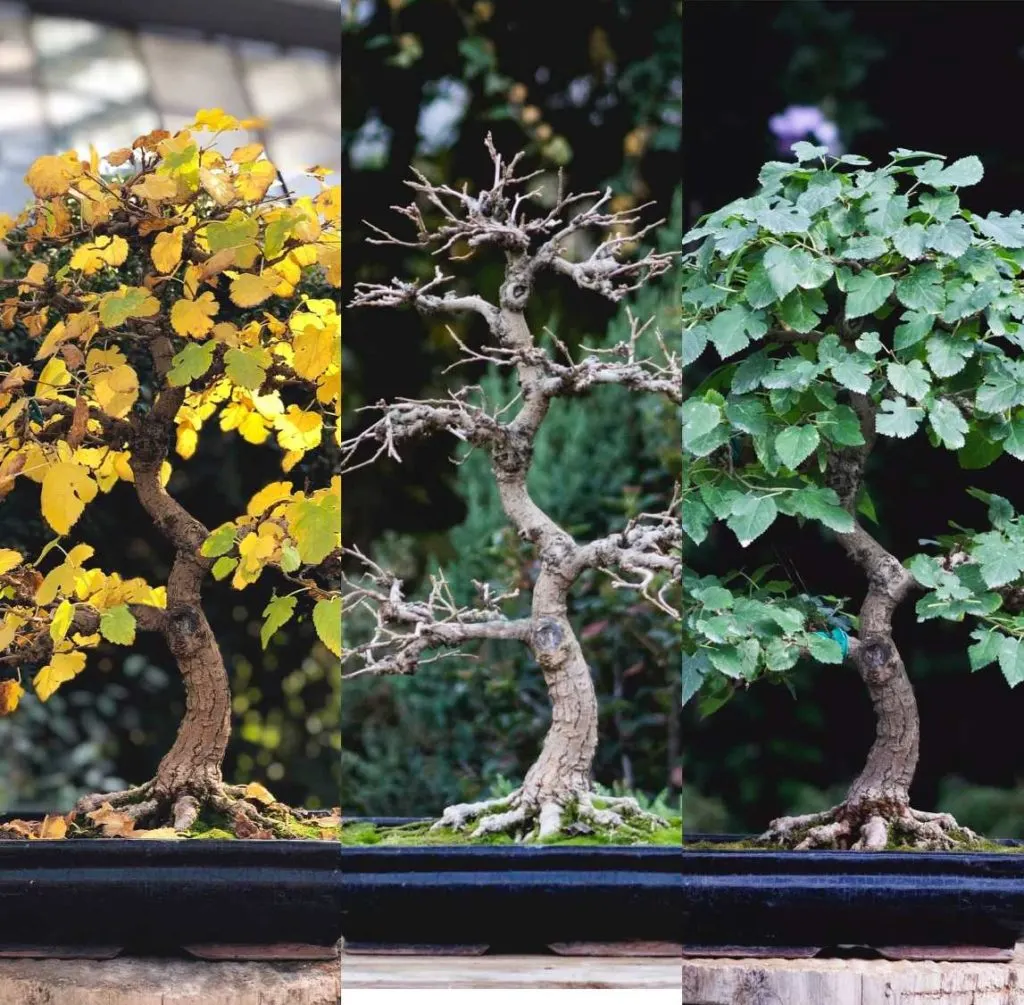
This mulberry is created in the Moyogi (模様木) style. Characteristic of this style are one or more curves in the trunk, where each subsequent bend proportionally diminishes toward the apex. According to the Moyogi rule, the apex of the tree is located on the central axis, perpendicular to the base of the bonsai trunk, which ensures the visual balance of the composition.
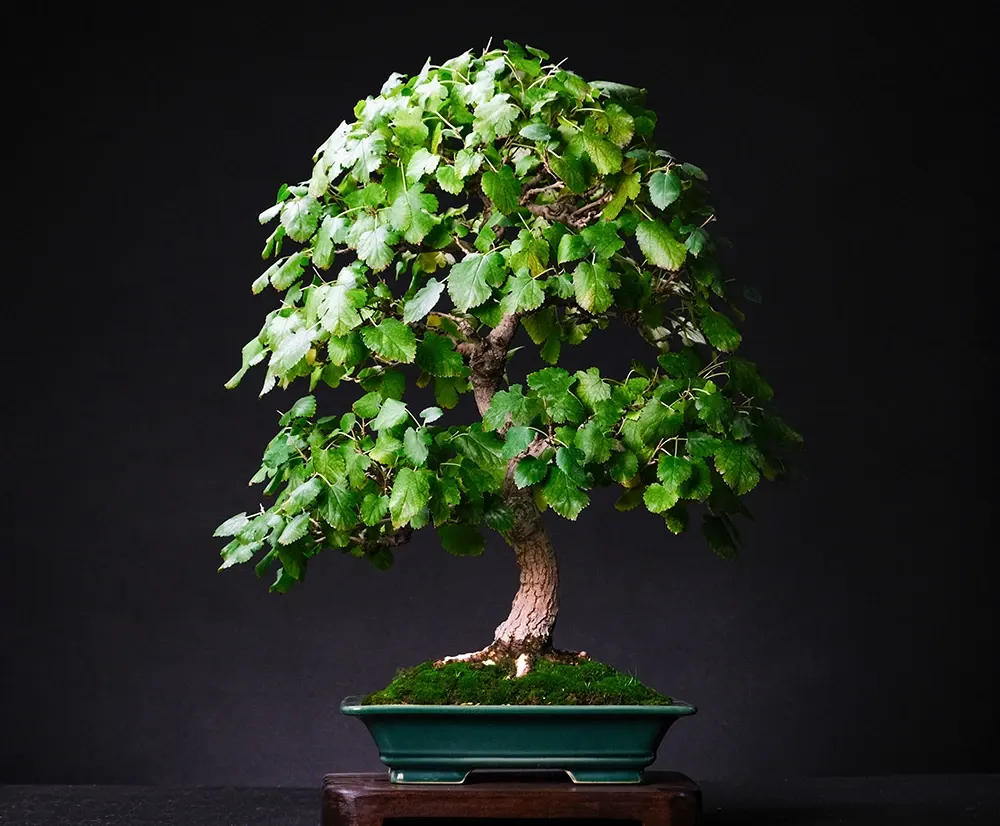
The mulberry is a resilient and fast-growing tree; it is pliable during shaping, pruning, and leaf trimming, which allows for a significant reduction in leaf size over the years. Its botanical characteristics make it possible to create a beautiful bonsai of any size.
The visual appearance of a bonsai is very important during the winter period as well. After the leaves fall, the tree’s structure becomes visible — the arrangement and placement of the branches, which is what the bonsai specialist works on for years.